
In this article:
1. Double Glazing Does Not Automatically Stop Solar Heat
2. First Work Out Where the Heat Is Coming From
3. SHGC Matters When Direct Sun Hits the Glass
4. Lower SHGC Is Not Automatically Better Everywhere
5. West-Facing Windows Can Be Particularly Challenging
6. Low-E Glass Can Help, but the Specification Matters
7. Large Glass Areas Can Still Bring in a Lot of Heat
8. External Shading Can Make a Major Difference
9. Internal Blinds Help Differently From External Shading
10. Window Orientation Changes the Best Glazing Choice
11. Airtight Windows Can Make Poor Ventilation More Noticeable
12. The Window Frame Is Only Part of the Problem
13. Installation Still Matters
14. The Roof and Walls May Be Adding More Heat Than the Windows
15. Why One Room Can Be Much Hotter Than the Rest of the House
16. What Should You Check in the Window Specification?
17. Should You Replace the Glass Again?
18. What a Better Summer-Comfort Strategy Looks Like
19. So Why Is the Room Still Too Hot?

Double glazing can improve thermal comfort, but it does not mean a sunny room will automatically stay cool in summer.
That can be confusing.
You replace old windows, the house becomes less draughty, the glass feels more substantial, and yet a west-facing bedroom or living room can still become uncomfortably hot in the afternoon.
The reason is that heat entering through windows and heat escaping through windows are not the same problem.
Double glazing can reduce heat transfer through the window, but summer comfort also depends on how much solar energy passes through the glass in the first place, how large the glazed area is, which direction the window faces, whether it is shaded and how the room is ventilated.
The first step is therefore not to ask whether the window is “double glazed”.
It is to work out why the room is overheating.
Double Glazing Does Not Automatically Stop Solar Heat
The air or gas space between panes helps reduce heat transfer through the glazing.
That is valuable in both hot and cold weather.
But direct sunlight introduces another type of heat gain.
Solar radiation reaches the glass, and part of that energy can pass into the room.
Once surfaces, furniture and floors inside begin to warm, the room can continue feeling hot even after direct sunlight moves away.
This is why two double-glazed windows can perform very differently in summer.
The number of panes matters, but so do the glass coatings, solar performance, orientation and shading.
Our broader guide to energy-efficient windows and doors explains how glazing, frames and seals work together in the complete system.
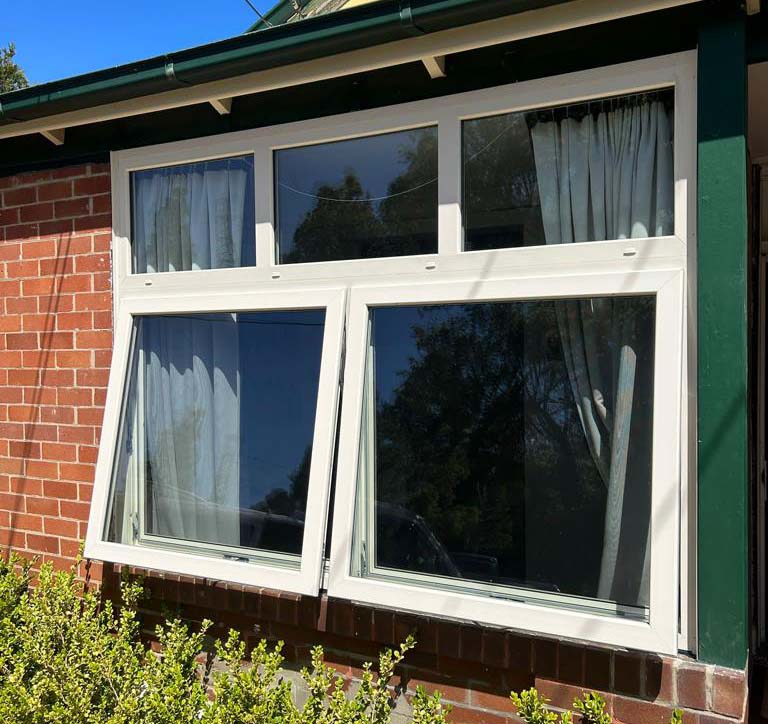
First Work Out Where the Heat Is Coming From
Before changing anything, look at when the room becomes hot.
Does it heat up mainly:
- in the morning;
- around midday;
- late in the afternoon;
- only on very sunny days;
- throughout the whole day;
- after the roof space has been hot for several hours?
The timing gives you useful clues.
A room that becomes hot quickly while direct sun is hitting the glass may have a solar-gain problem.
A room that stays relatively comfortable during the day but becomes hotter later may also be receiving heat from the roof, walls or other building elements.
If only one room is affected, compare its orientation, glass area, shading and ventilation with the rest of the house.
SHGC Matters When Direct Sun Hits the Glass
One of the most useful figures for understanding solar heat through a window is the Solar Heat Gain Coefficient, usually shortened to SHGC.
SHGC indicates the proportion of solar heat that passes through the complete window system.
A lower SHGC generally means less solar heat enters through the window.
That can be useful where unwanted summer sun is a major problem.
But SHGC should not be considered on its own.
Visible light, U-value, orientation, climate, shading and the way the room is used all matter.
The goal is not simply to find the lowest possible number.
The goal is to select glazing that suits the actual window and location.
Lower SHGC Is Not Automatically Better Everywhere
It can be tempting to assume:
lower SHGC = better window.
That is too simple.
A window that receives difficult afternoon summer sun may benefit from greater solar control.
But another window may be positioned where winter solar gain is useful.
In Australia, north-facing glazing can receive useful lower-angle winter sun when the building and shading are designed appropriately.
A very low SHGC everywhere could reduce useful winter solar gain as well as unwanted summer heat.
That is why whole-house glazing specifications do not always need to be identical on every facade.
The right choice depends on orientation and design.
West-Facing Windows Can Be Particularly Challenging
West-facing glazing is often difficult because it receives strong afternoon sun when outdoor temperatures are already high.
The sun is also lower in the sky at this time.
That can make horizontal eaves less effective than they are against higher-angle midday sun.
A room with large west-facing windows may therefore overheat even when the window itself has good insulation.
This does not mean the double glazing has failed.
It may mean the glazing was specified mainly around U-value or general thermal performance without enough attention to afternoon solar gain.
For these openings, glass specification and shading deserve particular attention.













Low-E Glass Can Help, but the Specification Matters
Low-emissivity, or Low-E, coatings are used to alter how radiant energy passes through glazing.
But “Low-E” is not one single performance level.
Different coated glass products can have different solar and thermal characteristics.
That means simply seeing Low-E written on a quotation does not tell you everything you need to know.
Ask what the actual whole-window performance is and why that glazing was selected for the orientation.
Our guide to Low-E glass provides more background on Low-E glazing and the measurements used to compare it.
The important point is that Low-E should be selected as part of the complete glazing specification, not treated as a generic upgrade that solves every overheating problem.
Large Glass Areas Can Still Bring in a Lot of Heat
A high-performance window can still represent a large area exposed to the sun.
That matters.
Imagine two rooms using the same glazing system.
One has a modest window.
The other has a wall containing several square metres of glass.
Even if the performance per square metre is identical, the room with much more exposed glazing can receive significantly more total solar heat.
This is why large sliding doors, fixed panels and floor-to-ceiling glazing need to be considered as part of the building design.
Window performance and glass area work together.
External Shading Can Make a Major Difference
One of the most effective ways to deal with solar heat is to stop direct sun before it reaches the glass.
Depending on the building, this may involve:
- eaves;
- awnings;
- external blinds;
- shutters;
- screens;
- pergolas;
- vegetation or other designed shading.
The best solution depends on the orientation and the movement of the sun.
The important principle is simple:
solar energy that never reaches the glass does not need to be managed after it enters the room.
For difficult windows, improving shading can sometimes be more useful than changing an otherwise good window.
Internal Blinds Help Differently From External Shading
Curtains and internal blinds can make a room feel more comfortable and reduce glare.
They can also reduce direct radiation reaching occupants and interior surfaces.
But by the time sunlight has passed through the glass, much of the solar energy is already inside the building envelope.
That is why internal shading and external shading should not be treated as identical solutions.
Internal blinds can still be very useful.
They simply solve part of the problem in a different place.
For a severe solar-gain problem, consider the glazing, external shading and internal treatment together.
Window Orientation Changes the Best Glazing Choice
The same glass specification does not necessarily make sense on every side of a house.
North, east, south and west-facing windows receive sunlight differently throughout the day and year.
A bedroom receiving strong western afternoon sun presents a different problem from a south-facing room with little direct solar exposure.
This is one reason whole-window performance figures are more useful than generic claims such as:
double glazing keeps your house cool.
The actual question is:
Which window specification is suitable for this opening?
Airtight Windows Can Make Poor Ventilation More Noticeable
Replacing old leaking windows can dramatically improve airtightness.
That is normally a good thing.
It reduces uncontrolled air leakage and helps the house retain conditioned indoor temperatures.
But it can also expose another problem.
If a room has poor ventilation, replacing leaky old windows can reduce uncontrolled air exchange and make accumulated indoor heat more noticeable, especially when solar gains are high.
This does not mean draughty windows were better.
It means ventilation needs to be considered deliberately rather than relying on accidental leakage around old frames.
Opening windows at appropriate times, cross-ventilation and the home’s wider ventilation strategy may all affect summer comfort.
Need a consultation?
Our operators will answer any questions
The Window Frame Is Only Part of the Problem
Frame material and construction influence thermal performance.
But when a room is overheating from strong direct sunlight through a large glazed opening, changing frame material alone is unlikely to solve the whole problem.
The glazing can represent most of the exposed area.
That means glass performance, orientation and shading deserve at least as much attention as the frame.
A good frame is still important.
It simply needs to be considered as part of the complete window rather than as the only thermal component.
Installation Still Matters
Good glazing cannot compensate for poor installation.
Gaps around the frame can allow uncontrolled air movement and reduce the performance of the complete opening.
Installation details can also influence how well the window operates and seals.
Our guide to why window installation quality matters explains why the product and installation should be considered together.
However, installation problems usually need to be distinguished from solar heat gain.
If a room becomes hot mainly when direct sunlight hits the glass, the glazing and shading deserve investigation even if the installation is excellent.
The Roof and Walls May Be Adding More Heat Than the Windows
Windows are easy to blame because you can see sunlight coming through them.
But the rest of the building also matters.
Heat can enter through:
- roof and ceiling areas;
- poorly insulated walls;
- unshaded external surfaces;
- doors;
- skylights;
- other windows.
A top-floor room beneath a hot roof can have a very different heat load from a ground-floor room with the same windows.
Before replacing the glazing again, consider whether the window is actually the dominant source of heat.
Why One Room Can Be Much Hotter Than the Rest of the House
This is a useful diagnostic clue.
If one room is consistently hotter, compare it with neighbouring rooms.
Look at:
- orientation;
- number and size of windows;
- direct sun exposure;
- roof exposure;
- shading;
- air movement;
- room volume;
- external walls;
- internal heat sources.
A west-facing bedroom with a large unshaded window may behave completely differently from an identical bedroom on another side of the house.
The difference may have very little to do with whether one window is double glazed and the other is not.
What Should You Check in the Window Specification?
If the overheating started or remained after new windows were installed, find the original quotation or technical specification.
Look for:
- glazing composition;
- Low-E coating;
- whole-window U-value;
- whole-window SHGC;
- visible light transmission where provided;
- frame system;
- orientation assumptions;
- whether solar control was discussed.
Do not focus only on the words double glazed.
A useful window specification should tell you more than the number of panes.
Our guide to determining window energy efficiency looks more broadly at the factors that contribute to window performance.
Should You Replace the Glass Again?
Not necessarily.
First identify the cause.
If direct solar heat is the main issue, investigate whether improved external shading could solve much of the problem.
If the glazing has a high solar heat gain for a difficult orientation, a different glass specification may be worth discussing.
If the heat is mainly entering through the roof or walls, replacing the glass again may produce a disappointing result.
If ventilation is poor, the room may need a better way to release accumulated heat.
The correct solution depends on the weakest part of the overall thermal design.
What a Better Summer-Comfort Strategy Looks Like
A comfortable room usually depends on several things working together.
For windows, that can include:
- suitable U-value;
- suitable SHGC;
- appropriate Low-E or solar-control glazing;
- good seals;
- professional installation;
- sensible window size and placement;
- external shading;
- useful ventilation.
The building around the window matters as well.
Roof insulation, wall insulation, air conditioning, ventilation and shading all influence the temperature you eventually experience indoors.
This is why replacing one component cannot always solve an entire overheating problem.
So Why Is the Room Still Too Hot?
If a room remains too hot even with double glazing, there are several likely explanations.
The window may have good insulation but allow more solar heat through than is appropriate for that orientation.
The glazed area may be large.
Direct afternoon sun may be hitting the window without effective shading.
The Low-E or solar-control specification may not match the problem.
The room may have limited ventilation.
Or the largest heat gain may actually be coming through the roof, walls or another part of the building.
The most useful question is therefore not:
“Why isn’t my double glazing working?”
It is:
“Where is the room gaining heat, and which part of the design should deal with it?”
Once that is clear, you can decide whether the next step is better shading, different glazing, improved ventilation or work elsewhere in the building.
Prestige Plus can help assess window orientation, glazing and the complete opening before a replacement system is specified.