
In this article:
2. How Double-Hung Windows Work
3. Which Gives Better Ventilation?
4. Awning Windows Can Be Useful When the Weather Changes
5. Double-Hung Windows Need No External Swing Space
6. Which Can Provide Better Airtightness?
7. What About Noise Reduction?
8. Which Is Easier to Use Around Furniture?
9. Which Is Easier to Clean?
10. What About Flyscreens?
11. Which Gives the Better View?
12. Awning Windows Work Well With Fixed Glazing
13. Which Is Better for Bathrooms and Laundries?
14. Which Is Better for Traditional Homes?
15. Which Works Better in Modern Homes?
16. Maintenance Is Different
17. When Double-Hung Windows May Be the Better Choice
18. When Awning Windows Usually Make More Sense
19. Awning vs Double-Hung Windows: Quick Comparison
20. So Which One Should You Choose?
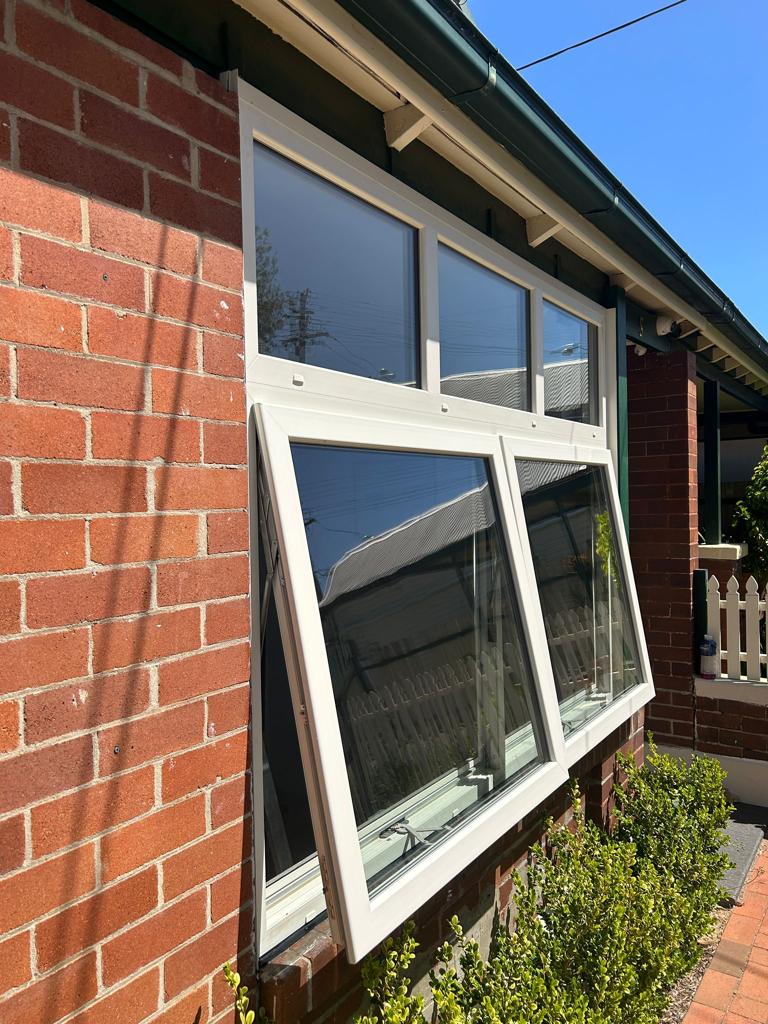
Awning and double-hung windows can both provide natural ventilation without needing a large side-hinged sash, but they achieve it in very different ways.
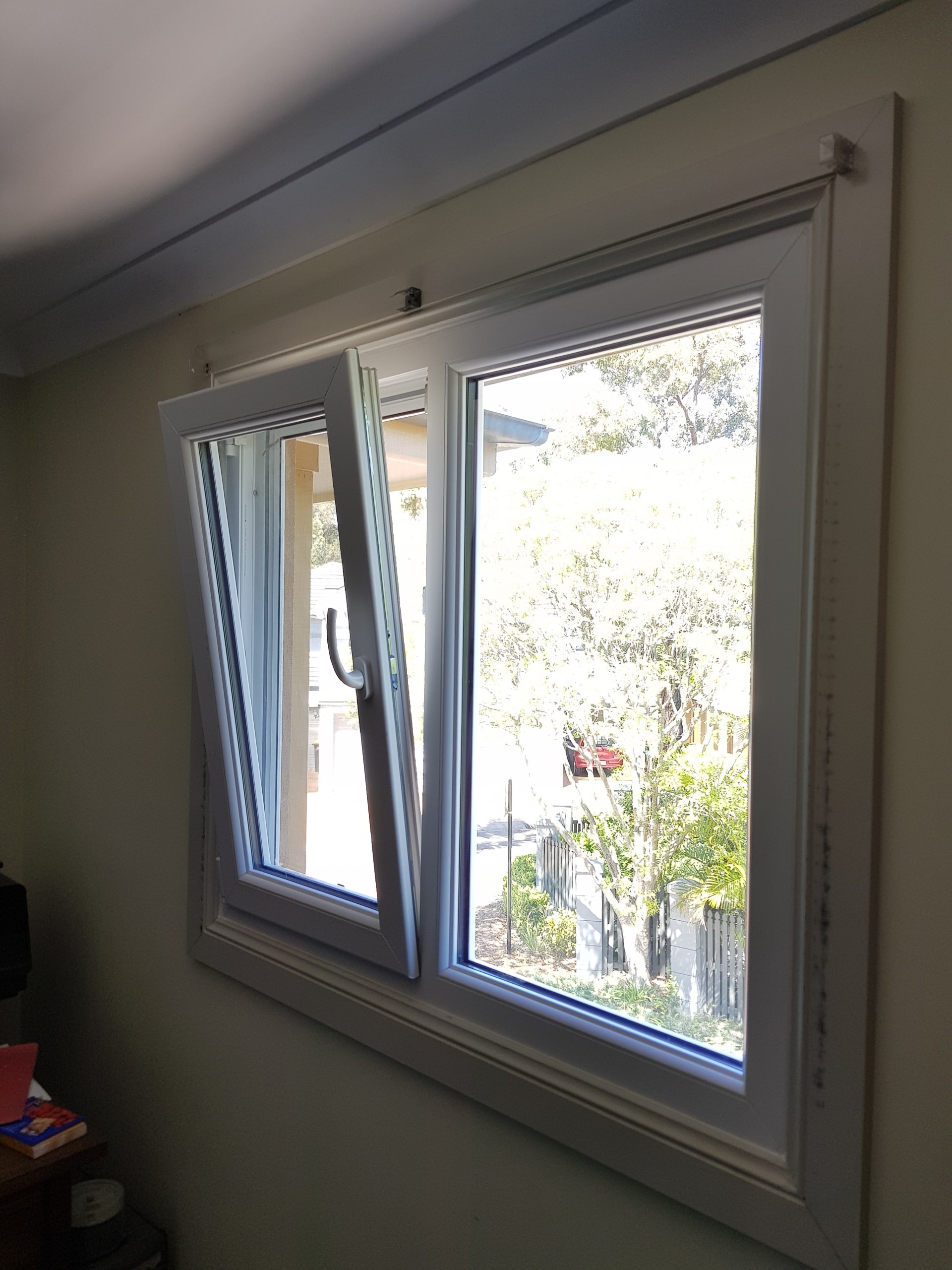
An awning window is hinged along the top and opens outward from the bottom.
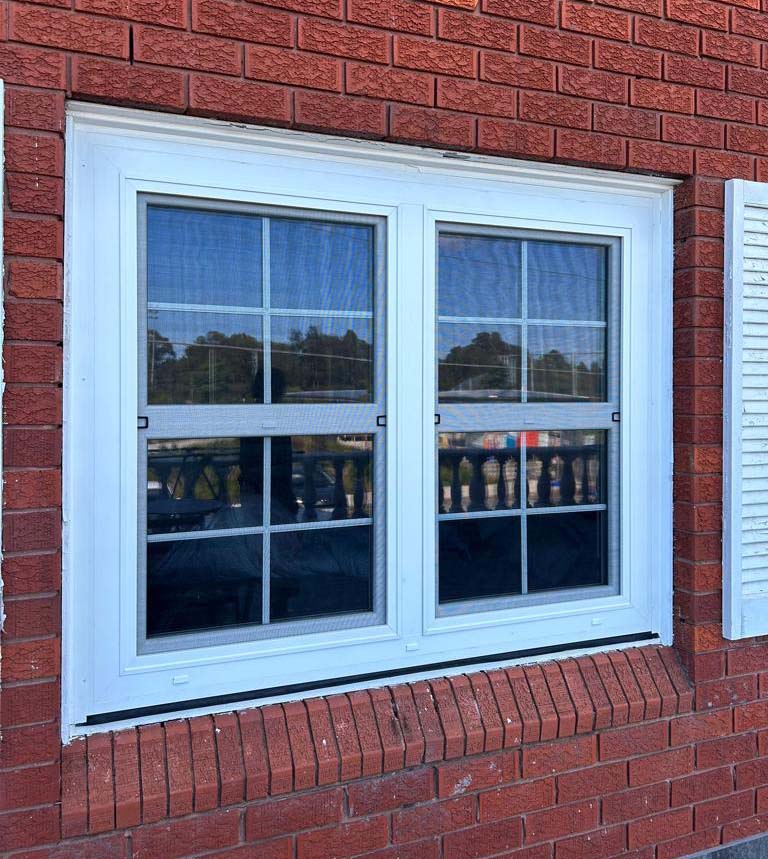
A double-hung window has two vertically arranged sashes that move up and down inside the frame.
At first glance, the choice may seem mostly architectural.
In practice, the opening mechanism affects ventilation, weather protection, external clearance, sealing, cleaning, flyscreens, maintenance and where the window works best.
Neither configuration is automatically better in every situation.
The useful question is:
Which mechanism solves the problem around this particular opening more effectively?
How Awning Windows Work
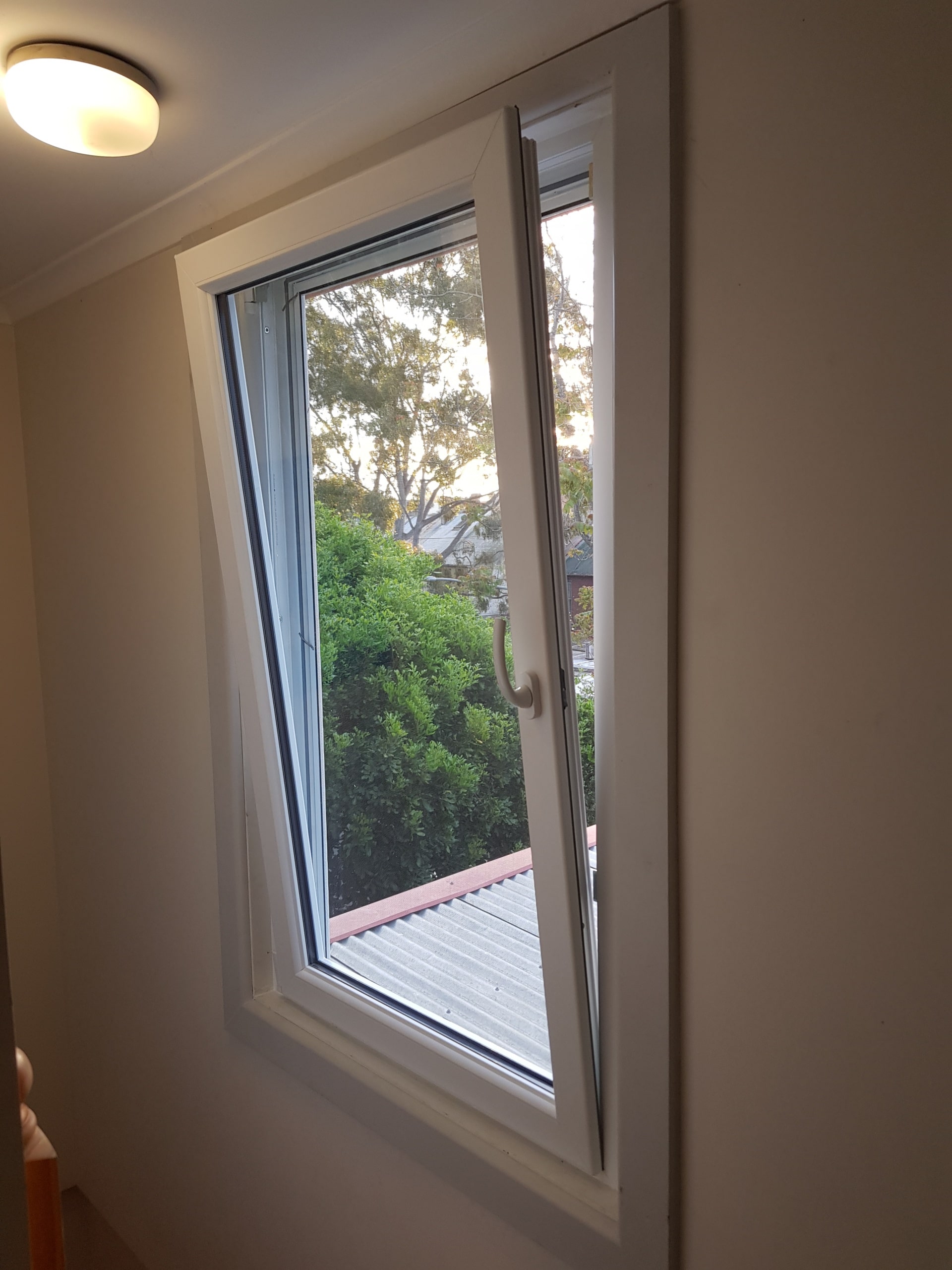
An awning window is hinged at the top.
When opened, the bottom of the sash projects outward while the upper edge remains attached to the frame.
The result resembles a small awning over the open part of the window, which is where the name comes from.
The opening angle depends on the particular hardware and window dimensions.
Awning windows can be used individually or incorporated into larger window combinations where part of the opening is fixed and another part provides ventilation.
Our guide to the main features of awning windows looks more closely at the operating hardware and configuration.
How Double-Hung Windows Work
A double-hung window uses two vertically arranged sashes.
The lower sash can move upward and the upper sash can move downward.
This means the window can provide ventilation from the lower part, upper part or both depending on the configuration.
Unlike an awning window, neither sash needs to project outside the building.
That can be useful where the window sits directly beside a walkway or another area where an outward-opening sash would be inconvenient.
Our existing guide to double-hung windows explains the basic configuration in more detail.

Which Gives Better Ventilation?
Both can provide effective ventilation, but the airflow behaves differently.
An awning window opens outward from the bottom.
This creates a controlled opening underneath the sash and can work particularly well where regular ventilation matters more than creating the largest possible open area.
A double-hung window offers another useful feature: the upper and lower parts of the opening can be adjusted independently.
Opening both sections can allow air movement at two different heights.
Actual airflow still depends on wind direction, pressure differences, window size and the rest of the room.
So there is no universal winner.
If flexible top-and-bottom ventilation is important, double-hung has a genuine advantage.
If a simple outward-opening sash providing controlled ventilation is more useful, awning may suit the opening better.
Awning Windows Can Be Useful When the Weather Changes
One practical characteristic of an awning window is the way the sash sits over the opening.
Because the top is hinged and the lower edge projects outward, the sash can provide some protection to the open area from light rain.
That can make awning windows useful in rooms where you want ventilation even when the weather is less predictable.
But this should not be overstated.
An open awning window is not weatherproof.
Wind-driven rain can still enter depending on wind direction, opening angle and conditions outside.
The advantage is simply that the sash geometry offers more protection above the opening than a completely exposed vertical opening.
Double-Hung Windows Need No External Swing Space
This is one of the strongest practical advantages of double-hung windows.
Both sashes remain within the plane of the frame.
Nothing projects outward.
That can make double-hung a sensible option where a window opens beside:
- a narrow external path;
- a balcony circulation area;
- landscaping;
- another structure;
- a location where an outward sash could become an obstruction.
An awning window needs some clear space outside because the lower part of the sash moves outward.
If the external clearance is very limited, that may be enough to rule out an awning configuration.








Which Can Provide Better Airtightness?
The answer depends on the actual window system.
Awning windows can use perimeter compression sealing when the sash closes against the frame.
In a well-designed system, this can provide very good airtightness.
Double-hung windows rely on vertically moving sashes and therefore use a different sealing arrangement around those moving interfaces.
That can make compression-sealed awning systems attractive where limiting uncontrolled air leakage is a priority.
But window style alone does not determine the result.
Frame design, hardware, seals, manufacturing quality and installation all matter.
It would therefore be misleading to say that every awning window is automatically more energy efficient than every double-hung window.
Compare the actual whole-window performance.
What About Noise Reduction?
The same caution applies to outside noise.
A tightly closing awning sash can be useful because good sealing is important for acoustic performance.
But the opening mechanism is only one part of the system.
Glazing, frame construction, seals and installation normally have a greater influence on the final result.
If outside noise is a major concern, select the complete window around the acoustic requirement rather than choosing awning solely because of the sash type.
Which Is Easier to Use Around Furniture?
Awning windows do not open into the room.
That means furniture can generally sit relatively close to the inside of the opening without being hit by the sash.
Double-hung windows also remain within the frame.
So from an interior-space perspective, both configurations can be practical.
The difference is usually outside.
An awning sash needs exterior clearance.
A double-hung sash does not.
For a kitchen bench, bathroom or laundry, the more important question may instead be whether the handle can be reached comfortably.
A technically suitable window is not very useful if operating it every day is awkward.
Which Is Easier to Clean?
This depends on the exact system and where the window is installed.
The external face of an outward-opening awning sash may be difficult to reach from inside in some installations.
Double-hung systems can also present cleaning challenges.
Some double-hung products use sashes that tilt inward, allowing the external glass surface to be cleaned from inside.
But that is not a feature of every double-hung window.
If indoor cleaning access matters – particularly on upper floors – ask to see exactly how the proposed product is cleaned rather than assuming that every window of a certain type works the same way.
What About Flyscreens?
Both configurations can work with flyscreens.
Because awning windows open outward, a flyscreen can generally remain on the interior side of the opening.
Double-hung screens are arranged so that the vertical movement of the sashes remains possible.
The practical issue is not whether either configuration can accept a screen.
It is how the specific screen arrangement affects operation, removal and cleaning.
Which Gives the Better View?
This depends on the window proportions.
A single awning sash can provide one relatively uninterrupted pane of glass.
A double-hung window has a horizontal meeting rail where the two sashes overlap.
That rail remains visible when the window is closed.
For a room overlooking a garden or another important view, the difference may be noticeable.
On the other hand, the horizontal division of a double-hung window may be desirable where the architecture calls for a traditional sash-window appearance.
The better view is therefore partly an architectural question.
Need a consultation?
Our operators will answer any questions
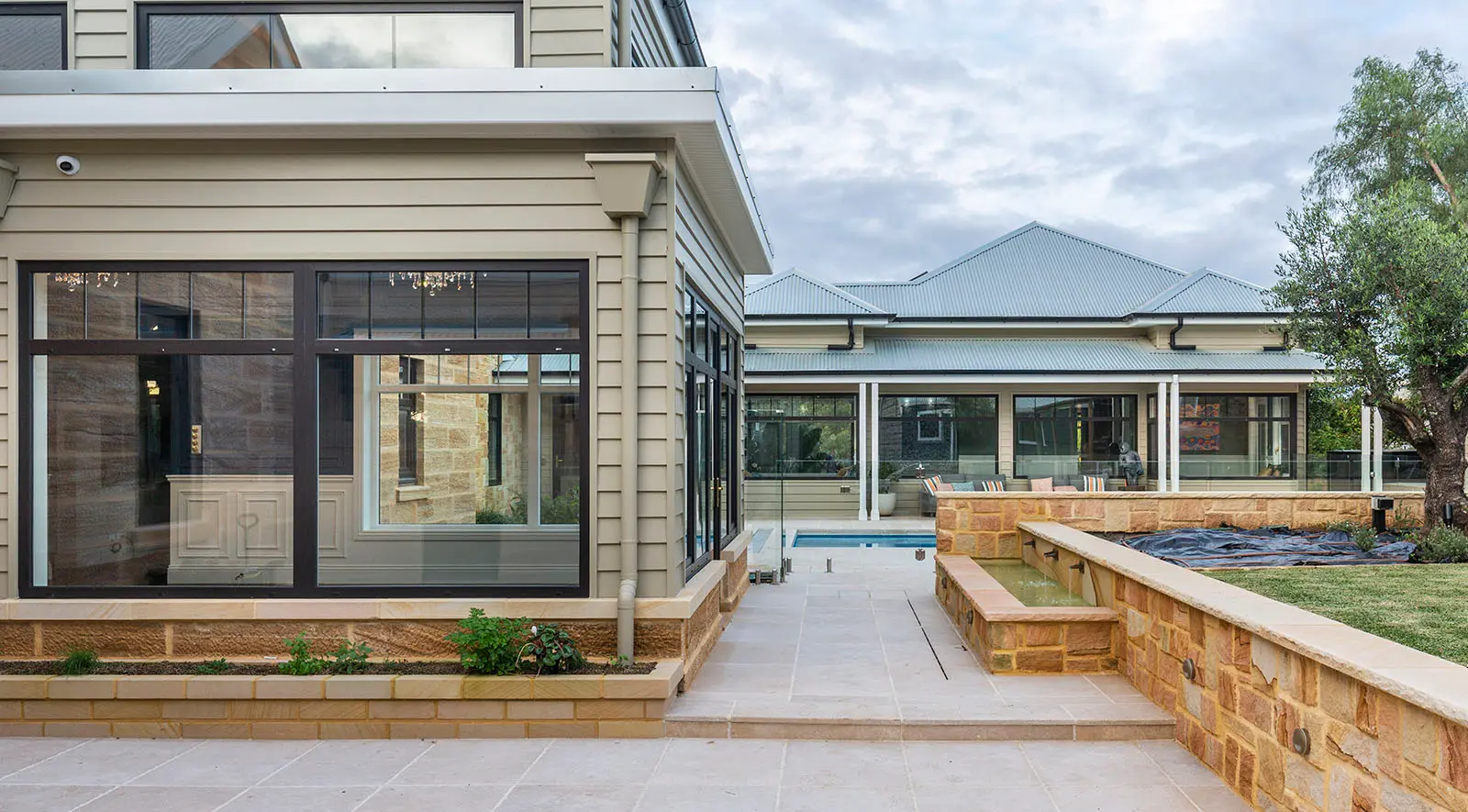
Awning Windows Work Well With Fixed Glazing
This is one of the areas where awning configurations can be particularly useful.
Not every part of a large window needs to open.
A large fixed pane can provide natural light and an uninterrupted view, while a smaller awning section provides ventilation.
For example, an opening might combine:
- a large fixed upper or central pane;
- one or more smaller awning sections;
- multiple fixed and opening sections within one overall frame.
This can reduce the amount of moving hardware while retaining ventilation where it is actually needed.
It can also work well in contemporary facades where large areas of glass are part of the design.

Which Is Better for Bathrooms and Laundries?
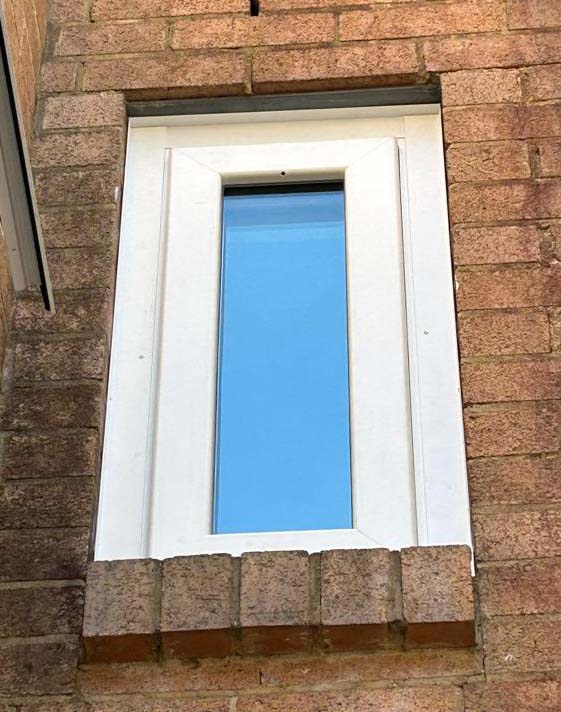
Awning windows are often particularly practical in bathrooms, laundries and similar rooms.
These spaces commonly need reliable ventilation but may not require the largest possible opening.
Awning configurations can also be positioned relatively high in the wall, helping provide ventilation while maintaining privacy.
The outward-opening sash does not interfere with the room itself.
Double-hung windows can also provide ventilation in these spaces, particularly if opening the upper sash helps maintain privacy.
The final choice depends on window position, external clearance and how the room will be used.
Which Is Better for Traditional Homes?
Double-hung windows have a genuine architectural advantage in some traditional homes.
Their proportions and horizontal meeting rail are strongly associated with colonial, Victorian and other traditional sash-window designs.
If preserving that appearance is a priority, a double-hung configuration may be the more visually appropriate solution.
An awning window can still be incorporated into traditional architecture, but the opening mechanism produces a different visual character.
This is one situation where function should not automatically override architectural context.
Which Works Better in Modern Homes?
Awning windows integrate easily into contemporary glazing layouts.
They can be combined with fixed panes, arranged in horizontal groups or used as smaller opening sections within a larger glazed composition.
That flexibility can make them particularly useful where the design emphasises:
- larger fixed glass areas;
- simple frame lines;
- controlled ventilation;
- custom window proportions.
Double-hung windows can certainly be used in modern homes as well.
But their horizontal sash division is a stronger visual feature.
Where a cleaner fixed-glass appearance is preferred, an awning-plus-fixed configuration can be easier to integrate.
Maintenance Is Different
Awning windows rely on hinges, stays and operating hardware that control the outward-moving sash.
Double-hung windows rely on the mechanisms that allow the two sashes to move vertically and remain supported within the frame.
Neither is maintenance-free.
Hardware should operate smoothly, seals should remain in good condition and moving components should be inspected periodically.
The useful question is not which mechanism has no maintenance.
It is how complicated the actual system is, how easily it can be serviced and whether replacement hardware is available.
Our comparison of awning vs casement windows looks at another common hinged-window alternative.
When Double-Hung Windows May Be the Better Choice
There are situations where double-hung windows make very good practical sense.
They may be worth considering when:
- the window cannot project outside because of a walkway or other obstruction;
- upper and lower ventilation is particularly useful;
- the architectural design calls for a traditional sash-window appearance;
- a specific tilt-in configuration provides useful indoor cleaning access;
- maintaining the historic character of the facade is important.
These are real advantages.
There is no reason to dismiss them simply because another window type is available.
When Awning Windows Usually Make More Sense
Awning windows become particularly attractive when the priorities are different.
They are often worth considering when:
- controlled everyday ventilation is important;
- some protection to the opening during light rain is useful;
- strong perimeter sealing is a priority;
- the window is positioned relatively high on a wall;
- bathrooms, laundries or utility spaces need ventilation;
- the design combines opening sections with large fixed panes;
- a contemporary glazing layout is preferred.
They can also be custom-sized around the opening rather than forcing the room to work around a particular traditional sash proportion.
The key is that these advantages come from the way the window operates, not simply from the name of the product.
Awning vs Double-Hung Windows: Quick Comparison
| Factor | Awning Windows | Double-Hung Windows |
|---|---|---|
| Opening method | Top-hinged, opens outward | Two vertically moving sashes |
| External projection | Yes | No |
| Controlled ventilation | Very good | Very good |
| Upper/lower ventilation | No | Yes |
| Light-rain protection | Some protection depending on conditions | Opening remains more exposed |
| Airtightness | Compression sealing possible | Sliding sash interfaces |
| Flyscreens | Usually easy to accommodate internally | Usually compatible |
| View | Single pane can minimise divisions | Horizontal meeting rail |
| Cleaning | Depends on access/system | Tilt-in systems can be convenient |
| Traditional appearance | Possible, but less characteristic | Strong advantage |
| Modern fixed-glass combinations | Excellent | Less flexible visually |
| Bathrooms/laundries | Very practical | Also suitable |
| External walkway | May be unsuitable | Strong advantage |
So Which One Should You Choose?
The better choice depends on the problem around the opening.
A double-hung window has clear advantages when external clearance is limited, upper-and-lower ventilation is useful or the architecture specifically calls for the traditional sash-window appearance.
That makes it a legitimate solution in the right building.
Awning windows become more compelling where the priorities are controlled ventilation, perimeter sealing, higher wall positioning, integration with fixed glazing and a modern window layout.
For many bathrooms, laundries, kitchens and contemporary living spaces, those characteristics can make an awning configuration particularly practical.
The important thing is not to choose from the window name alone.
Look at:
- where the sash needs to move;
- how the room is ventilated;
- whether rain exposure matters;
- how the window will be cleaned;
- whether fixed glazing is part of the design;
- the architectural style;
- the actual performance of the complete window system.
If an awning configuration is the better fit for the opening, Prestige Plus manufactures custom awning windows with glazing, dimensions and hardware selected around the project.